Renting in Fukushima, Osaka
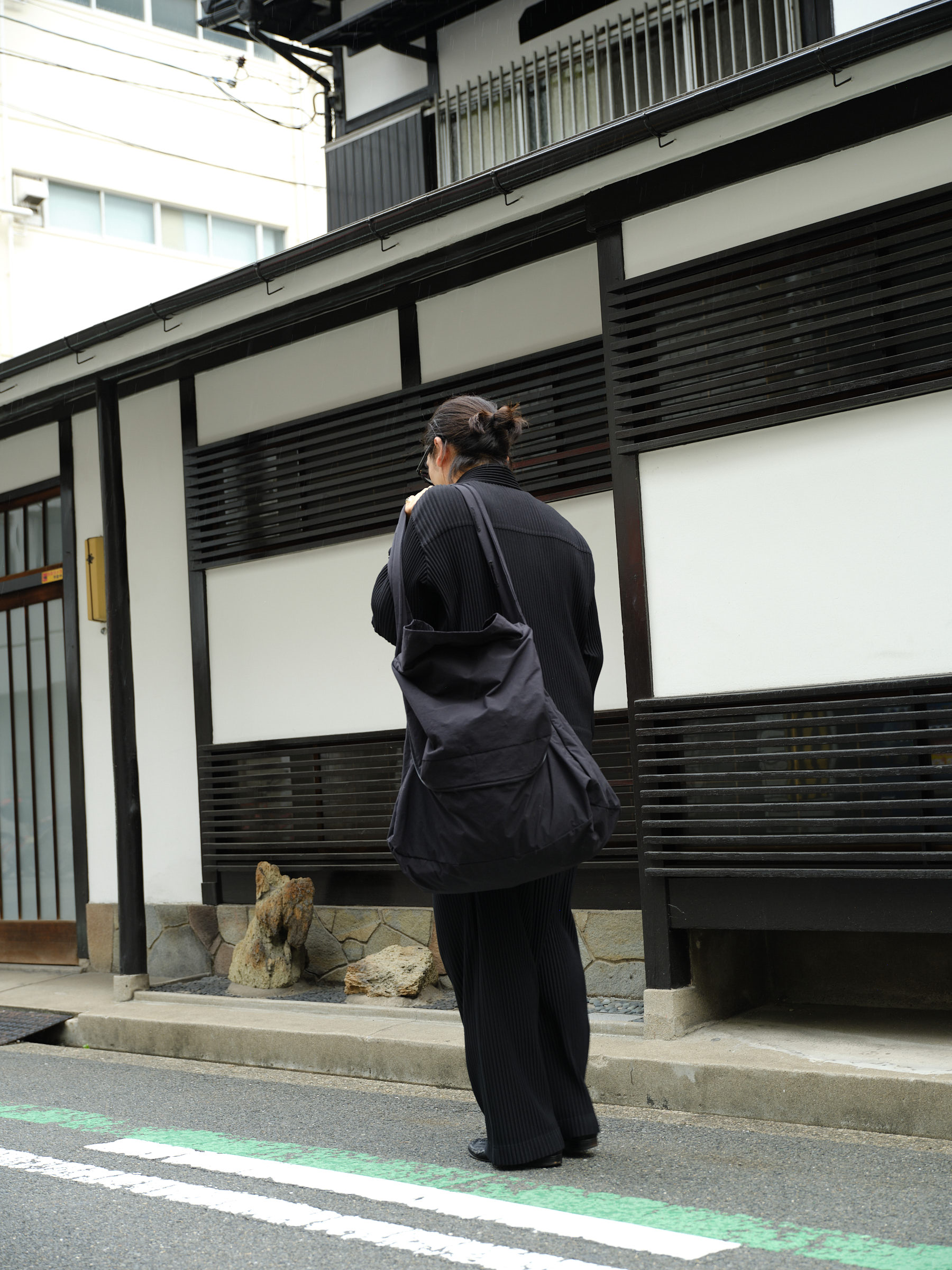

If you ask long-term foreign residents in Osaka which neighborhood they'd choose again knowing what they know now, Fukushima comes up with striking regularity. Not because it's the most famous, not because it appears on the tourist maps, but because it works — as a place to actually live, in the way that matters once the novelty of being in Japan settles into daily life.
Fukushima-ku is a compact ward sitting directly west of Osaka's central business district, separated from Kita-ku (where Umeda sits) by the Dojima River. It is central without being chaotic, food-obsessed in the best possible way, and has developed over the past decade into one of the most in-demand residential addresses in the city for international professionals, young couples, and anyone who values quality of life over pure proximity to a landmark.
It's also a rental market with specific dynamics — a combination of strong demand, relatively constrained supply, and a mix of management company profiles — that makes knowing how to search here well before you start genuinely worthwhile.
This guide covers everything you need: the character of the area, what the rental market looks like for foreign tenants, where the friction points are, and how to approach the search effectively.
Fukushima-ku is one of Osaka's smaller wards in terms of land area, but its density of quality restaurants, independent cafés, bars, and specialty food shops per square meter is arguably unmatched in the city. This reputation is well-established among Osaka residents and has been for years — but it hasn't yet been absorbed into the standard international apartment hunting conversation, which still tends to anchor on Namba or Shinsaibashi.
The ward is bounded by rivers on two sides — the Dojima to the north (separating it from Nakanoshima and Kita-ku) and the Nishiyoko River to the southwest — which gives it a gently contained, walkable character. The main commercial street, Fukushima 7-chome, is a concentrated stretch of restaurants that draws people from across the city. The surrounding residential streets are quieter, genuinely neighborhood-feeling, and increasingly dense with the kind of small-batch coffee shops, natural wine bars, and independent food businesses that signal a neighborhood that has arrived without trying to announce it.
Fukushima's residential zone extends into the adjacent Noda area to the west, which shares the ward's general character at slightly lower price points. The Kintetsu Noda Hanshin station (also served by the Osaka Metro Chuo Line at Awaza) provides an additional transit anchor and extends the practical search zone for foreign renters looking for Fukushima character at Noda prices.
The two areas are often best understood together when mapping an apartment search, and the most experienced brokers in the area treat them as a single zone with internal price variation rather than as separate markets.
Fukushima station on the JR Osaka Loop Line puts you one stop from Osaka Station (Umeda) and directly connected to the Loop's circuit around the city. The nearby Noda Hanshin station on the Hanshin Main Line provides direct access to Kobe — making Fukushima genuinely convenient for residents with professional connections across the Osaka-Kobe corridor.
Osaka Station / Umeda is a 4-minute train ride or a 15-minute walk along the river. Namba is 10 minutes by subway via Awaza. This is exceptional central access without the noise and tourist density of being in the entertainment districts themselves.
For international residents whose work or social life spans the full Kansai region, Fukushima's position provides the flexibility of central access with the ability to decompress in a neighborhood that isn't primarily oriented toward visitors.
This deserves more than a passing mention because it's a genuine quality-of-life differentiator. Fukushima's restaurant concentration is not a discovery of the past few years — the area has been Osaka's "restaurant street" for decades, with everything from standing sushi bars to Michelin-starred kaiseki within the same few blocks. For residents who care about eating well as part of daily life rather than as an occasional event, Fukushima is simply better positioned than almost any other residential area in the city.
The independent café culture has developed in parallel. Specialty coffee, small-batch roasters, and the kind of places that function as informal working spaces have proliferated throughout the ward in the past five years, making Fukushima genuinely functional for remote workers and digital nomads alongside its restaurant identity.
Fukushima has seen significant residential development over the past decade. A combination of river proximity (views, perceived desirability), excellent transit, and the neighborhood's rising profile has attracted developer investment, resulting in a meaningful proportion of newer mid-rise and tower mansion construction alongside the older stock.
This means the rental market spans a wider quality range than many central Osaka neighborhoods — from older pre-renovation mansions offering good value for location, through to recently completed buildings with modern specifications at the top of the local price range. The variation in quality within a small geographic area is a feature, not a bug, for renters who know how to search it.
Fukushima consistently ranks among Osaka's more expensive residential areas on a per-square-meter basis, reflecting the demand premium the location commands. As of early 2026, realistic monthly rents for foreign-accessible units:
1K / 1DK (20–35 sqm):
1LDK (35–55 sqm):
2LDK (55–75 sqm):
Tower mansion units (where available) push to the upper end of these ranges and beyond, with high-floor river-view units in premium buildings reaching ¥180,000–¥280,000/month for well-sized 1LDK and 2LDK configurations.
River-facing units carry a consistent premium over equivalent inland units. The Dojima and Nishiyoko riverside stretches command ¥10,000–¥20,000/month above inland comparables for similar floor areas and building quality.
Fukushima's desirability means that good units move quickly. Unlike some other central Osaka areas where inventory sits for several weeks, well-priced units in sought-after Fukushima buildings can receive multiple applications within days of listing. This creates a specific challenge for foreign applicants: the compressed timeline between a unit appearing on SUUMO and being taken is not compatible with the longer documentation preparation and application process that foreign tenants often need.
A broker with active relationships in the area can access information about upcoming availability before units are publicly listed, and can have your documentation prepared in advance so that when the right unit appears, you can move immediately rather than spending three days gathering paperwork.
Fukushima's profile as a destination for international residents means that the proportion of management companies with genuine foreign tenant experience is higher here than in many comparable Osaka neighborhoods. Newer buildings in particular tend to be managed by professionally organized companies that process foreign applications routinely and work with a range of commercial guarantor companies.
However, the ward also contains older stock managed by smaller agencies with less international experience, and individual landlords in the area vary significantly in their attitudes toward foreign tenants. The gap between buildings that are genuinely accessible and buildings that appear accessible from the listing — but face informal resistance at the application stage — is real.
This is the specific terrain where broker knowledge pays off most directly. Knowing which buildings' management companies will go to bat for a foreign applicant and which ones won't, before you pay an agency fee on the application, is not information available from any public listing platform.
The guarantor landscape in Fukushima broadly reflects the Osaka market pattern, with a few area-specific nuances. The higher average rent levels in the ward mean that income documentation thresholds are slightly higher than in lower-priced areas — management companies expect to see roughly 3x monthly rent as monthly income, which for a ¥130,000 unit means ¥390,000/month in demonstrable income.
For foreign applicants with non-standard income — remote workers, freelancers, self-employed professionals — Fukushima's price level makes income documentation strategy more important, not less. The guarantor companies serving the area's better buildings are professional operations with their own screening criteria, and presenting income documentation in a format they can assess requires preparation.
Our guide to how guarantor companies work in Japan covers the mechanics in full, including which income types create friction and how to document non-standard income effectively.
Fukushima has a higher-than-average proportion of professionally managed buildings with amenity infrastructure — elevator, auto-lock entrance, sometimes concierge or parcel delivery systems. These buildings carry monthly management fees (kanri-hi) of ¥10,000–¥25,000 on top of the listed rent. A unit advertised at ¥130,000/month may carry ¥18,000/month in management fees, making the realistic monthly outgoing ¥148,000.
This is standard across all of Osaka, but the premium building concentration in Fukushima means the management fee issue is more frequently encountered here than in lower-specification neighborhoods. Always ask for the management fee (kanri-hi) and sinking fund contribution (shūzen tsumitatekin, relevant for owner-purchasers) before building any budget calculation.
Several new residential developments in the Fukushima and Noda zones have been in various stages of construction over the past few years. Pre-completion sales and rentals from these projects sometimes appear in search results before the building is ready, creating timeline uncertainty for applicants working against a move-in deadline.
Working with a broker who tracks development timelines in the area avoids situations where you commit to a search timeline only to discover your preferred building won't be ready for another four months.
The riverside premium in Fukushima assumes an actual view, but "river view" on a listing doesn't guarantee an unobstructed one. Low floors in riverside buildings can face the embankment walls rather than open water. Newer developments between the building and the river can partially or fully obstruct views from lower and mid-floor units. These distinctions require physical inspection or broker knowledge of the specific building's orientation and adjacent development context.
Japan's rental upfront cost structure applies uniformly in Fukushima, and the higher rents here mean absolute numbers are higher than the Osaka average:
For a ¥130,000/month apartment, realistic total move-in costs run ¥450,000–¥650,000 depending on key money and deposit structure. Our initial costs guide breaks down every component in detail.
Fukushima has a rhythm that suits people who work, care about food, and want a neighborhood to actually inhabit rather than just sleep in. The mornings are quiet — the restaurants don't open until lunch, and the residential streets are calm. The lunch hour brings activity to Fukushima 7-chome. Evenings are when the area comes fully alive, with the combination of local residents, office workers from Umeda, and the broader Osaka dining public creating genuine energy that dissipates by late night rather than running through it.
For families, the combination of park access along the riverfront, good local infrastructure, and relative quiet on the residential streets makes Fukushima more family-compatible than its food scene reputation might suggest.
Daily shopping is served by supermarkets within easy walking distance of most Fukushima addresses. The ward lacks the department store infrastructure of Umeda — there's no large shopping complex — but this is generally experienced as an asset rather than a deficit by residents who value the neighborhood's independent character.
Healthcare, banking, post office, and the other everyday infrastructure are all present. The ward office (kuyakusho) for Fukushima-ku handles the administrative requirements of moving in — residence registration, national health insurance enrollment — and serves the ward's international resident population with standard efficiency.
vs. Umeda / Namba: Fukushima has genuine neighborhood character that Umeda's commercial center and Namba's entertainment zone don't offer. The trade-off is slightly more limited late-night convenience and a narrower selection of large retail. For residents prioritizing quality of daily life over commercial density, Fukushima consistently outperforms.
vs. Nakazakicho / Tenjinbashisuji: These areas have a similar independent creative character but different price points and transit profiles. Nakazakicho's inventory is tighter and quirkier; Fukushima's is broader and better-serviced by new-build stock. The right choice depends heavily on specific preferences and lifestyle.
vs. Tanimachi: Both are underappreciated by the standard expat apartment hunting conversation. Tanimachi offers more historical character and better multi-line transit; Fukushima offers the food scene and JR/Hanshin access to Kobe. Not competing — serving different preferences. Our Tanimachi apartment guide covers that area for comparison.
vs. Namba: Higher cost, more local character, similar transit access to most of Osaka. Foreign tenant application process is broadly comparable in ease — both areas have high management company professionalization — but Fukushima units at equivalent price points typically offer better quality buildings and more genuine neighborhood infrastructure. Our Namba guide covers the specific dynamics of that market.
For a full city-wide neighborhood comparison, our guide to the best Osaka neighborhoods for expats maps the trade-offs across the city.
The demand pressure in Fukushima means that the window between a unit appearing publicly and being taken is genuinely short. For foreign applicants — whose documentation preparation and guarantor setup adds time to the application process — searching without pre-positioned broker relationships in the area is a structural disadvantage.
Maido Estate's Room Finder service addresses this directly. You share your criteria — budget, unit size, floor preference, move-in timeline, visa status, lease length — and we conduct the search across public platforms and our direct network of Fukushima and Noda management companies. We present you with pre-vetted options: guarantor compatibility confirmed, management company stance on foreign tenants verified, total move-in cost transparent.
For units in buildings where we have direct management company relationships, we can access availability information earlier than public listing, and have your application positioned to move at the speed the market requires. In Fukushima, that speed advantage is worth more than in most other Osaka neighborhoods.
Read the full explanation of how the service works: Osaka Room Finder — How Maido Estate Searches for the Right Apartment on Your Behalf.
Entirely — it's a mainstream residential neighborhood with no meaningful safety concerns. The name creates confusion for foreign residents unfamiliar with the area (the ward predates the Fukushima prefecture by centuries as a place name), but there is no connection to the 2011 nuclear incident. Our ward safety overview addresses Osaka ward safety in full context.
Furnished inventory in Fukushima is limited relative to tourist-facing districts. The neighborhood's orientation toward longer-term residents means most stock is unfurnished. For stays of 4 months or more, the economics of unfurnished plus Japan's secondhand furniture market consistently outperform furnished units' rent premiums. Our full analysis of furnished apartments in Osaka covers this comparison with real numbers.
Pet-friendly inventory exists in Fukushima but is constrained — as it is throughout central Osaka. Our guide to pet-friendly areas and apartments in Osaka covers where to find this specific inventory and what the application process looks like for pet owners.
The combination of coworking options (several dedicated spaces within walking distance or a short transit ride), café culture that accommodates laptop workers, and central transit access makes Fukushima one of the better Osaka neighborhoods for remote workers. The higher rent level requires a budget that works at Fukushima prices, but the quality-of-life return on that spend is among the highest in the city. Our guide to renting in Japan as a digital nomad covers the broader nomad rental situation in Osaka.
Fukushima's combination of central access, food culture, and genuine neighborhood character makes it one of the most compelling residential choices in Osaka for foreign residents who've done their homework. The rental market rewards speed and preparation — and those two things are exactly what broker support provides.
If you want to understand what's realistically available in Fukushima for your profile and timeline, start with a conversation with Maido Estate. We'll give you an honest picture of what's on the market, what it actually costs all-in, and what the process looks like for where you are.
Maido Estate is a licensed real estate agency based in Osaka, Japan, specializing in helping foreign nationals rent, buy, and invest in Japanese property. We operate across the Kansai region in English, French, and Japanese.


